
Introduction
If there is one ingredient that dermatologists, beauty editors, and skincare enthusiasts all agree on in 2026, it is Vitamin C. Often hailed as the “Holy Grail” of skincare, Vitamin C is a potent antioxidant that does more than just brighten your complexion; it transforms the very health of your skin cells.
Whether you are struggling with dark spots, fine lines, or a dull complexion, Vitamin C is the engine that drives skin repair and protection. However, with so many serums and creams on the market, understanding how to use it correctly is essential for seeing real results. This comprehensive guide will explore the science-backed benefits of Vitamin C and how to integrate it into your daily routine for maximum glow.
1. What Exactly is Vitamin C?
In the world of chemistry, Vitamin C is known as L-Ascorbic Acid. It is a water-soluble nutrient that plays a vital role in maintaining the health of your body’s connective tissues. Unlike plants and most animals, humans cannot synthesize Vitamin C on their own, meaning we must rely on food and topical applications to reap its beauty benefits.
When applied topically, it is 20 times more potent for the skin than when taken orally. This makes Vitamin C serums a non-negotiable step for anyone looking to achieve professional-level skincare results at home.
2. The Top 5 Benefits of Vitamin C for Skin
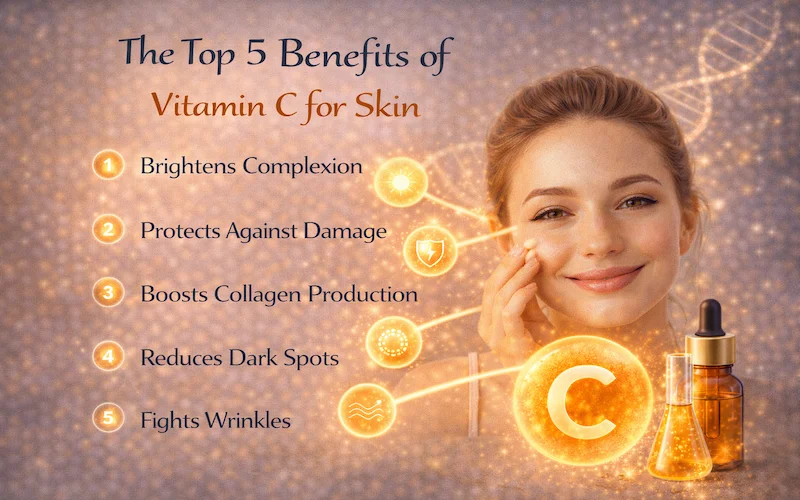
A. Extraordinary Brightening Power
Vitamin C is famous for its ability to inhibit melanin production. Melanin is the pigment responsible for dark spots and hyperpigmentation. By regular application, Vitamin C helps fade existing sunspots and prevents new ones from forming, leading to an even, radiant skin tone.
B. The Ultimate Collagen Booster
Collagen is the protein responsible for skin elasticity and firmness. As we age, collagen production naturally slows down, leading to sagging and wrinkles. Vitamin C is an essential cofactor for the enzymes that stabilize and cross-link collagen molecules. In simple terms: no Vitamin C, no new collagen.
C. Protection Against Free Radicals
Your skin is under constant attack from “free radicals”—unstable molecules caused by UV rays and air pollution. Vitamin C acts as a shield, neutralizing these molecules before they can damage your skin cells. This “photoprotective” quality makes it the perfect partner for your daily sunscreen.
D. Reducing Under-Eye Circles
By thickening the delicate dermis under the eyes and concealing the dark blood vessels underneath, Vitamin C can significantly reduce the appearance of dark circles. It smooths the fine lines in this area, making you look more rested and youthful.
E. Accelerating Wound Healing
Because it triggers cell regeneration and collagen synthesis, Vitamin C speeds up the healing process of acne scars and minor skin irritations. It reduces inflammation and redness, helping your skin bounce back faster from breakouts.
3. Choosing the Right Form of Vitamin C
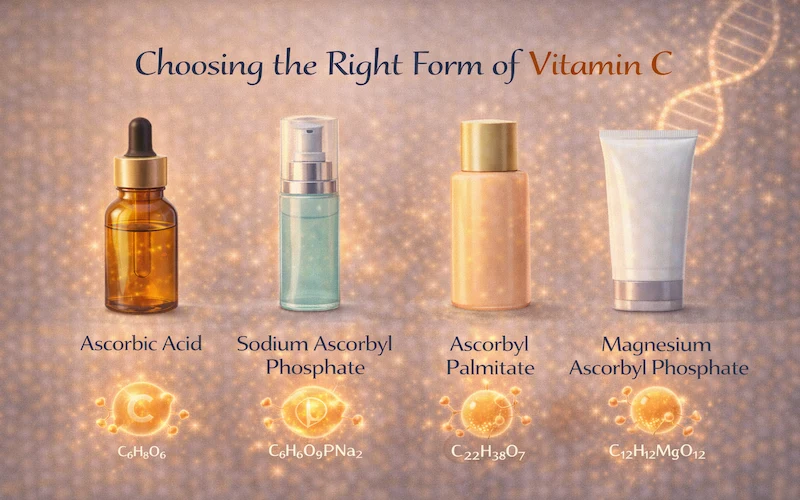
Not all Vitamin C products are created equal. To get the best results for your site’s readers, it’s important to distinguish between the types:
-
L-Ascorbic Acid: The most powerful and well-researched form, but can be irritating for sensitive skin.
-
Sodium Ascorbyl Phosphate: A gentler, stable form that is excellent for acne-prone skin.
-
Magnesium Ascorbyl Phosphate: Highly hydrating and great for dry or sensitive skin types.
4. How to Layer Vitamin C in Your Routine
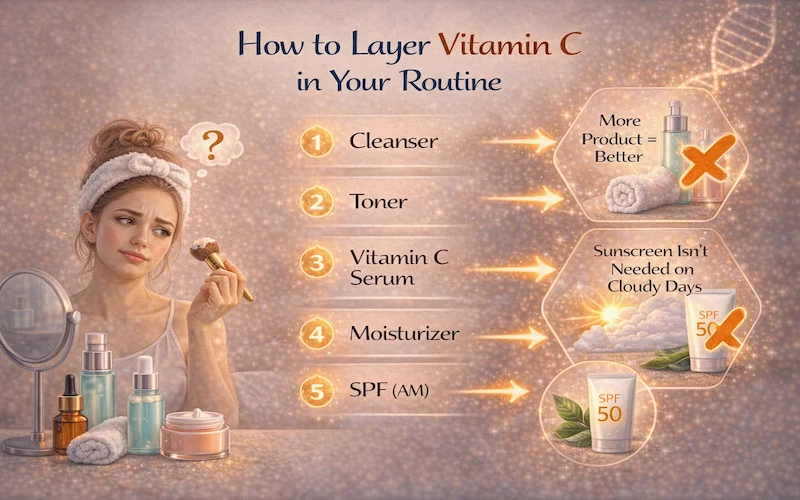
To maximize the “Glow” in Glow Pure Daily, follow this professional layering sequence:
-
Cleanse: Start with a fresh face.
-
Apply Vitamin C Serum: Apply to dry skin immediately after cleansing or toning.
-
Wait: Give it 1-2 minutes to fully absorb.
-
Moisturize: Lock in the serum with your favorite moisturizer.
-
Sunscreen (SPF): This is the most critical step. Vitamin C makes your SPF work better, but the serum itself can degrade if exposed to sun without protection.
5. Common Myths and Mistakes

-
Myth: More is better. A concentration of 10% to 20% is the sweet spot. Anything higher can cause irritation without providing extra benefits.
-
Mistake: Using oxidized serum. Vitamin C is highly unstable. If your serum turns dark orange or brown, it has oxidized and lost its potency. Always store it in a cool, dark place.
-
Myth: You can’t use it with Retinol. You can, but it’s better to use Vitamin C in the morning (for protection) and Retinol at night (for repair).
6. Vitamin C and Your Diet: The Internal Glow
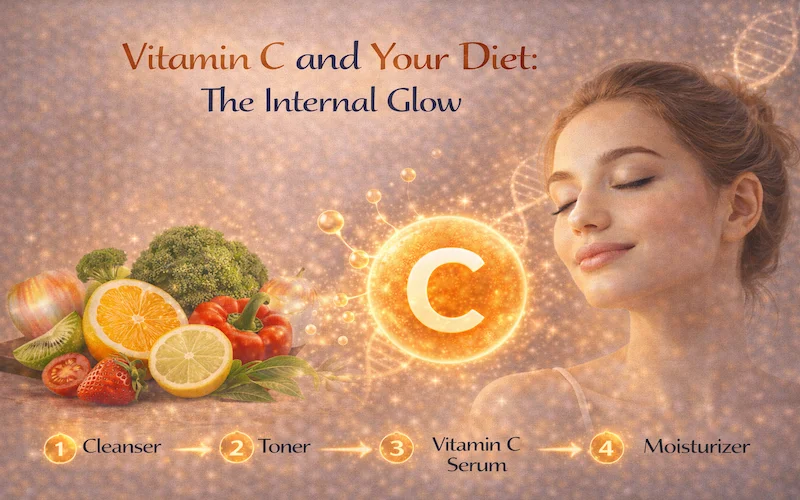
While topical serums are vital, supporting your skin with Vitamin C-rich superfoods completes the cycle of health. Citrus fruits, strawberries, bell peppers, and kiwi are excellent sources. When your internal levels are high, your skin’s ability to defend itself against environmental stress is significantly enhanced.
Conclusion
Integrating Vitamin C into your skincare routine is one of the smartest moves you can make for your long-term beauty. Its ability to brighten, protect, and firm the skin is unmatched by almost any other ingredient. By being consistent and choosing the right products, you can unlock a level of radiance that truly reflects the “Pure Glow” we strive for every day.
2 thoughts on “Vitamin C for Skin: The Ultimate Guide to the Holy Grail of Radiance”