Introduction
Hair thinning in women is more common than many people realize.
While some shedding is normal, noticeable thinning, widening parts, or reduced volume can feel concerning.
The good news? Understanding the root cause is the first step toward managing it effectively.
This guide explains the most common causes of hair thinning in women and what may help support healthier growth.
Is Hair Thinning Normal?
It is normal to lose around:
50–100 hairs per day.
However, if you notice:
-
Increased shedding
-
Visible scalp
-
Thinner ponytail
-
Widening hair part
It may indicate an underlying cause.
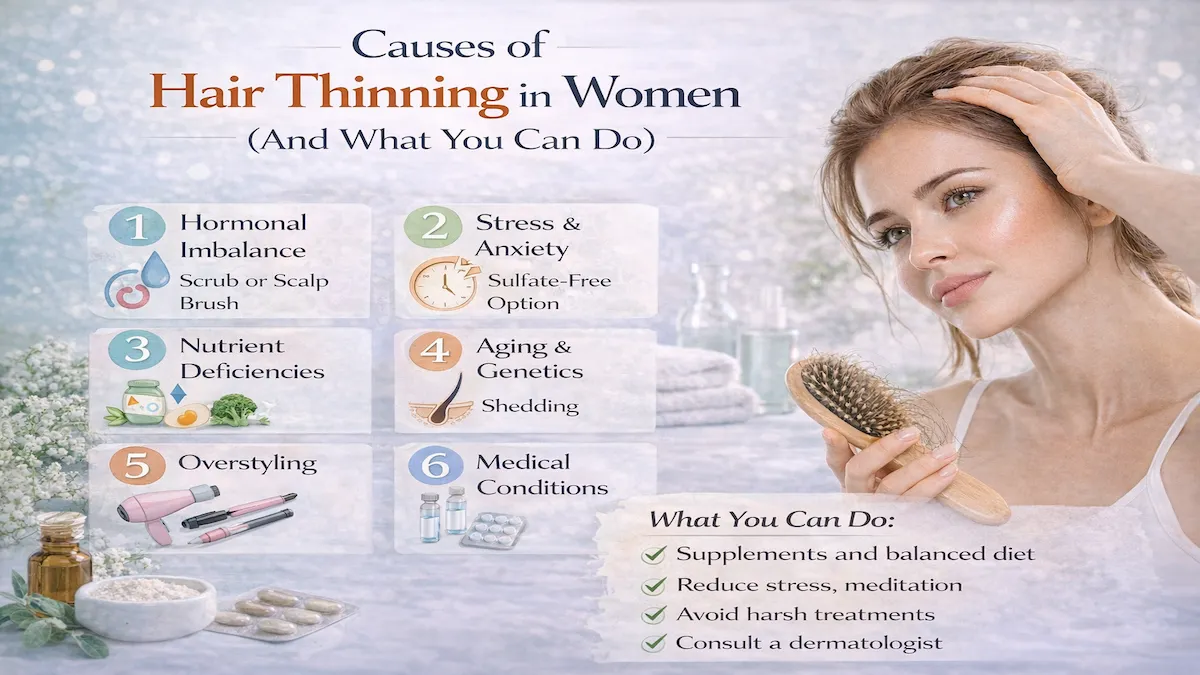
Common Causes of Hair Thinning in Women
1 Hormonal Changes
Hormones play a major role in hair growth cycles.
Hair thinning may occur during:
-
Pregnancy
-
Postpartum period
-
Perimenopause
-
Menopause
Hormonal fluctuations can shift hair into the shedding phase.
2 Androgenetic Alopecia (Female Pattern Hair Loss)
This is a genetic condition.
It often appears as:
-
Gradual thinning at the crown
-
Widening of the part line
-
Overall reduced density
It develops slowly over time.
3 Stress (Telogen Effluvium)
High physical or emotional stress may push hair into a shedding phase.
Triggers include:
-
Illness
-
Surgery
-
Major life changes
-
Crash dieting
Shedding often begins 2–3 months after the trigger.
4 Nutritional Deficiencies
Hair requires key nutrients.
Common deficiencies linked to thinning:
-
Iron
-
Vitamin D
-
Protein
-
Zinc
Balanced nutrition supports hair strength.
5 Tight Hairstyles
Constant tension from:
-
Tight ponytails
-
Braids
-
Extensions
may cause traction-related thinning over time.
6 Overstyling and Heat Damage
Excessive heat tools and chemical treatments can weaken strands and increase breakage.
Breakage can make thinning appear worse.
7 Scalp Health Issues
An unhealthy scalp environment may contribute to:
-
Inflammation
-
Buildup
-
Excess oil
Scalp care is essential.
(Internal link → Scalp Care Routine)
What You Can Do to Support Healthier Hair
✔ Improve Scalp Care
Cleanse regularly and avoid buildup.
(Internal link → Hair Growth Guide)
✔ Reduce Stress
Prioritize sleep and stress management.
✔ Review Your Nutrition
If concerned about deficiencies, consult a healthcare professional.
✔ Avoid Tight Hairstyles
Give your hair breaks from tension styles.
✔ Be Patient
Hair cycles take time to adjust.
Improvements may take 3–6 months.
When to See a Professional
Seek professional advice if:
-
Thinning is sudden
-
Shedding is excessive
-
You notice bald patches
-
Scalp irritation persists
Early intervention may improve outcomes.
Frequently Asked Questions
Can hair thinning in women be reversed?
It depends on the cause. Some types respond well to early care.
Is stress-related hair loss permanent?
Often temporary once the stress trigger is addressed.
Does washing hair cause thinning?
No. Washing removes shed hairs already in the resting phase.
Related Guides
-
How to Stop Hair Breakage
Final Thoughts
Hair thinning in women can result from various factors — hormonal changes, stress, genetics, or lifestyle habits.
Understanding the cause allows you to take targeted, realistic steps toward supporting stronger, healthier hair.
Consistency and patience are key.