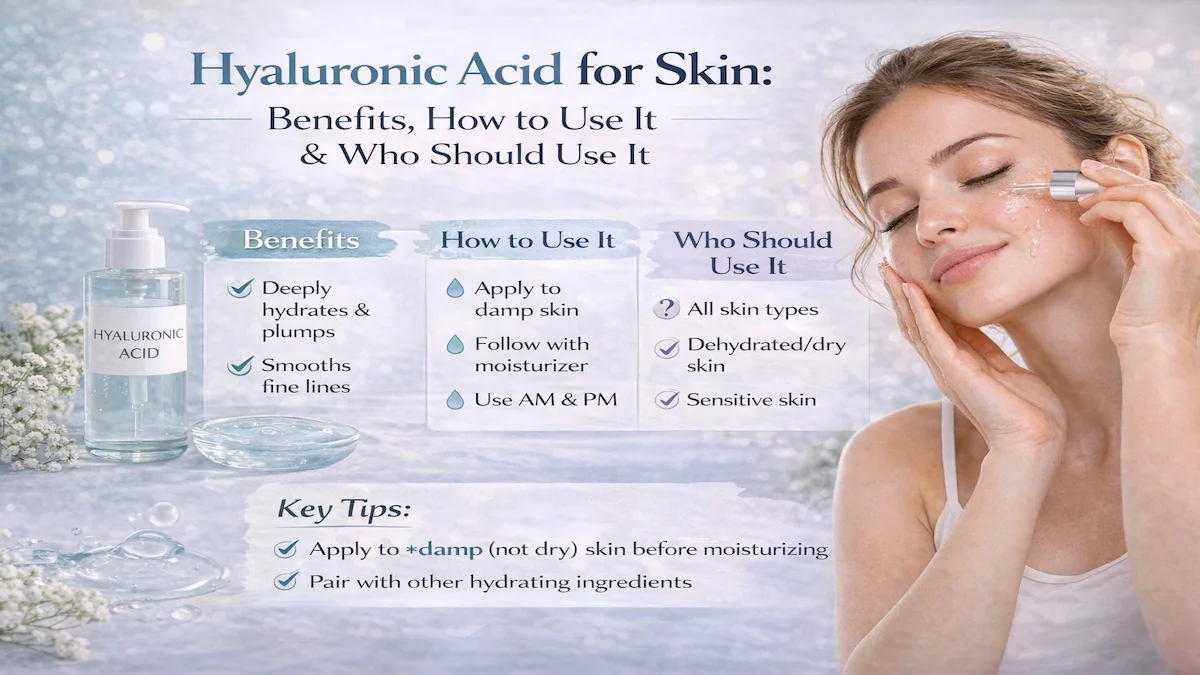
Introduction
Hyaluronic acid is one of the most popular hydrating ingredients in modern skincare.
Known for its ability to attract and retain moisture, it helps the skin appear plumper, smoother, and more hydrated.
But what exactly does it do — and who should use it?
This guide explains the benefits of hyaluronic acid, how to use it correctly, and how to avoid common mistakes.
What Is Hyaluronic Acid?
Hyaluronic acid (HA) is a naturally occurring substance found in your skin.
Its main role is to retain water and keep tissues well-lubricated.
In skincare, it works as a humectant, meaning it draws moisture into the skin.
Benefits of Hyaluronic Acid for Skin
1 Deep Hydration
Hyaluronic acid can hold many times its weight in water.
This helps:
-
Reduce dryness
-
Improve skin smoothness
-
Support elasticity
2 Plumper Appearance
Well-hydrated skin looks:
-
Softer
-
More supple
-
Less prone to fine lines
Hydration may temporarily reduce the appearance of wrinkles.
3 Barrier Support
Proper hydration strengthens the skin barrier and reduces irritation.
(Internal link → How to Repair a Damaged Skin Barrier)
4 Works for All Skin Types
Hyaluronic acid is generally suitable for:
-
Oily skin
-
Dry skin
-
Sensitive skin
-
Acne-prone skin
It is lightweight and non-comedogenic.
How to Use Hyaluronic Acid Correctly
Step 1: Apply on Damp Skin
This is very important.
Apply hyaluronic acid to slightly damp skin to help it bind moisture effectively.
Step 2: Seal With Moisturizer
Hyaluronic acid must be followed by a moisturizer.
Without sealing, moisture may evaporate.
Step 3: Use Morning and/or Night
It can be used:
-
In the morning under sunscreen
-
At night before moisturizer
It pairs well with most ingredients.
Can You Use Hyaluronic Acid With Retinol?
Yes.
In fact, it may help reduce dryness caused by retinol.
(Internal link → Retinol for Beginners)
Can You Use It With Vitamin C?
Yes.
Hyaluronic acid layers well with vitamin C and may enhance hydration.
(Internal link → Vitamin C Guide)
Common Mistakes
❌ Applying on completely dry skin
❌ Skipping moisturizer
❌ Using too many hydrating layers
❌ Expecting it to replace moisturizer
Hyaluronic acid hydrates — it does not replace barrier creams.
Who Should Use Hyaluronic Acid?
It is especially helpful for:
-
Dry skin
-
Dehydrated skin
-
Mature skin
-
Sensitive skin
-
Anyone using retinol
Frequently Asked Questions
Can hyaluronic acid cause breakouts?
It is generally non-comedogenic and suitable for acne-prone skin.
Can I use hyaluronic acid every day?
Yes, it is safe for daily use.
Is hyaluronic acid good for aging skin?
Yes, hydration supports a plumper, smoother appearance.
Related Guides
Final Thoughts
Hyaluronic acid is one of the safest and most versatile skincare ingredients.
When used correctly — on damp skin and sealed with moisturizer — it can significantly improve hydration and overall skin comfort.
Consistency and proper layering make all the difference.