
Introduction
While your morning skincare routine is all about protection (shielding your skin from UV rays and pollution), your nighttime skincare routine is dedicated to repair and regeneration. While you sleep, your body’s cell turnover rate increases, and the skin works double-time to fix the damage caused during the day.
In 2026, skincare science has proven that what you apply before bed is significantly more impactful than what you apply at sunrise. If you want to wake up with that elusive “glass skin” glow, you need a structured, science-backed evening ritual. This guide will walk you through every essential step of a professional nighttime routine, tailored for maximum absorption and long-term results.
1. The Double Cleanse: The Foundation of Purity
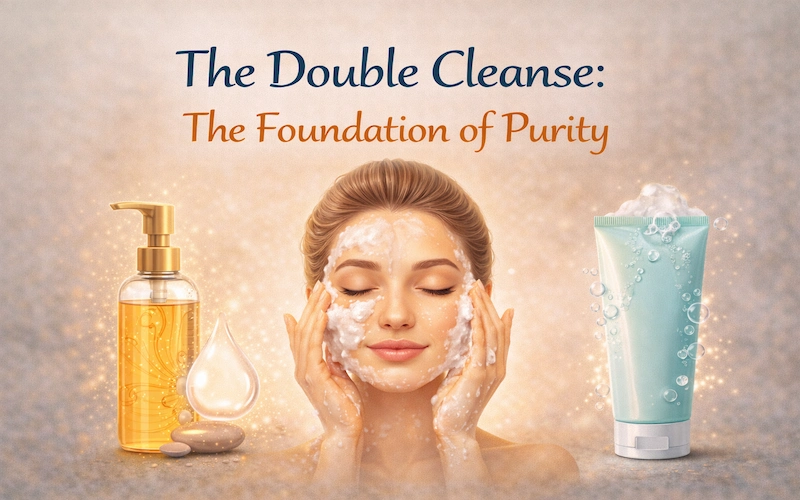
The biggest mistake many make is using a simple face wash to remove a day’s worth of SPF, makeup, and urban grime. For a truly effective nighttime routine, you must adopt the Double Cleanse method.
-
Step A (Oil-Based Cleanser): Use a cleansing balm or oil to dissolve stubborn makeup and sunscreen. Like dissolves like, and oil-based cleansers are the only way to break down sebum and pollutants effectively.
-
Step B (Water-Based Cleanser): Follow up with a gentle, pH-balanced foaming or milky cleanser to wash away any remaining residue and treat the actual skin.
-
The Benefit: This ensures your pores are completely clear, allowing your expensive serums to penetrate deeper.
2. Toning: Balancing the Canvas
Gone are the days of harsh, alcohol-based toners. Modern nighttime toners are meant to balance the skin’s pH and provide the first layer of hydration.
-
Look for: Ingredients like Rose Water, Witch Hazel (alcohol-free), or Hyaluronic Acid.
-
Application: Pat the toner into your skin with your hands instead of a cotton pad to minimize waste and irritation.
3. The Power of Serums and Treatments

Nighttime is the best window to use “active” ingredients that are sensitive to sunlight. This is the “treatment” phase of your routine.
-
Retinoids (The Gold Standard): Retinol or Tretinoin should almost always be used at night. They stimulate collagen and speed up cell turnover. If you are a beginner, use the “sandwich method”—moisturizer, then retinol, then moisturizer again to prevent irritation.
-
Alpha Hydroxy Acids (AHAs): Ingredients like Glycolic or Lactic acid gently exfoliate dead skin cells while you sleep, revealing brighter skin by morning.
-
Note: Never use Retinol and AHAs on the same night. Alternate them to avoid damaging your skin barrier.
4. Eye Care: Addressing the Delicate Area
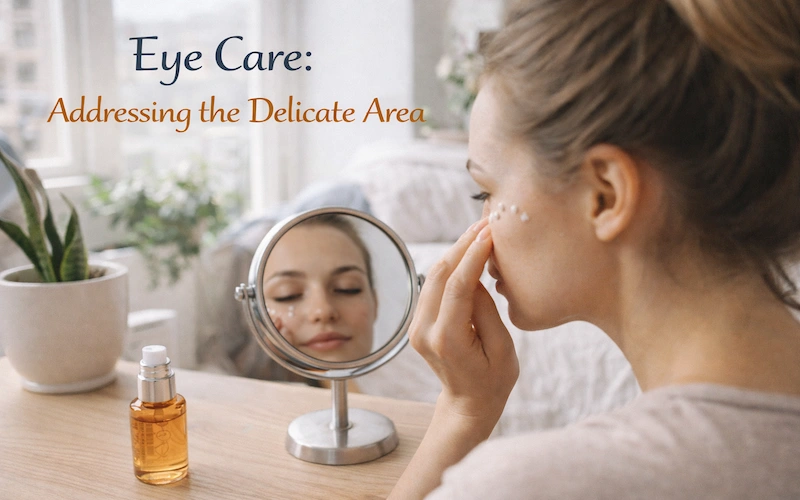
The skin around your eyes is 40% thinner than the rest of your face and lacks oil glands. This is where signs of aging and fatigue show up first.
-
Ingredients to look for: Peptides for firmness, Caffeine for puffiness, or Ceramides for hydration.
-
Technique: Use your ring finger to gently dab the cream along the orbital bone. Avoid getting too close to the lash line to prevent irritation.
5. Nighttime Moisturizing and Locking It In
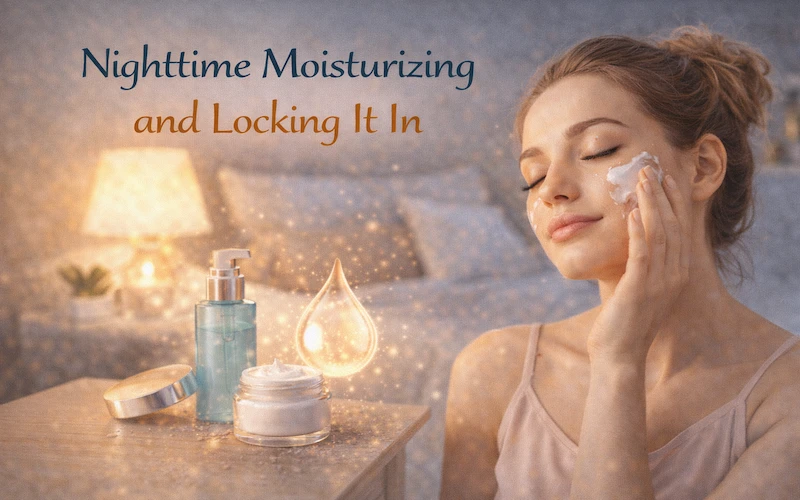
A nighttime moisturizer is usually thicker and more occlusive than your daytime lotion. Its job is to create a seal over your skin to prevent Transepidermal Water Loss (TEWL).
-
Ceramides and Fatty Acids: These are the building blocks of a healthy skin barrier.
-
Slugging (Optional for Dry Skin): For those with extremely dry skin, applying a thin layer of a petrolatum-based ointment (like Vaseline) over your moisturizer can lock in hydration all night long.
6. Lip Care: Don’t Forget the Pout

Your lips don’t have sweat glands, meaning they dry out faster than any other part of your face. Use a thick lip mask or an organic balm containing shea butter or beeswax before bed. This ensures you wake up with soft, hydrated lips rather than chapped ones.
7. The “Hidden” Factors: Pillowcases and Sleep Position
A nighttime routine doesn’t end with products; your environment matters too.
-
Silk Pillowcases: Cotton absorbs moisture from your skin and causes friction, leading to “sleep wrinkles.” Silk or satin allows the skin to glide, preserving your products and your skin’s elasticity.
-
Sleep Position: Sleeping on your back is the best way to prevent gravity from pushing your face into the pillow, which can lead to permanent fine lines over time.
8. The Importance of “Beauty Sleep” Duration
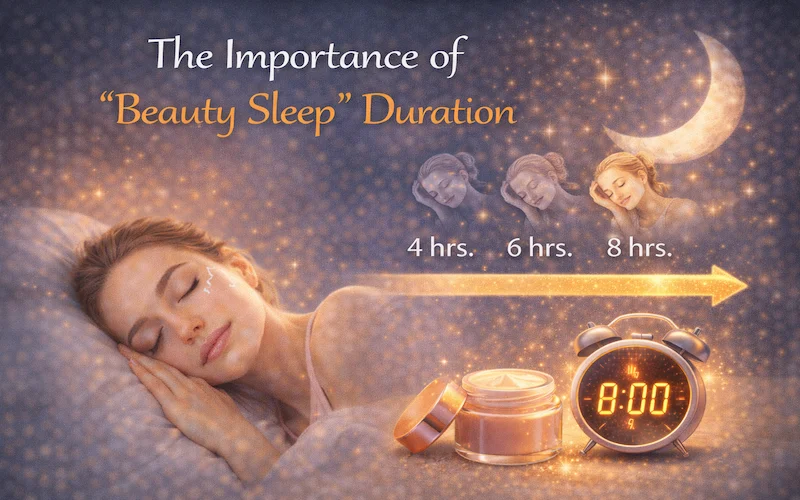
The term “beauty sleep” is rooted in biology. Growth hormones are released during deep sleep stages, which facilitate tissue repair and cell production. Aiming for 7-9 hours of quality sleep is just as important as the serums you apply. Without rest, the skin becomes stressed, leading to increased cortisol and inflammation.
Conclusion
A nighttime skincare routine is an investment in your future self. By taking 10-15 minutes every evening to cleanse, treat, and hydrate, you are working in harmony with your body’s natural rhythm. Consistency is the most powerful ingredient in any beauty regimen. Stick to this routine, listen to your skin’s needs, and enjoy the radiant results every morning.